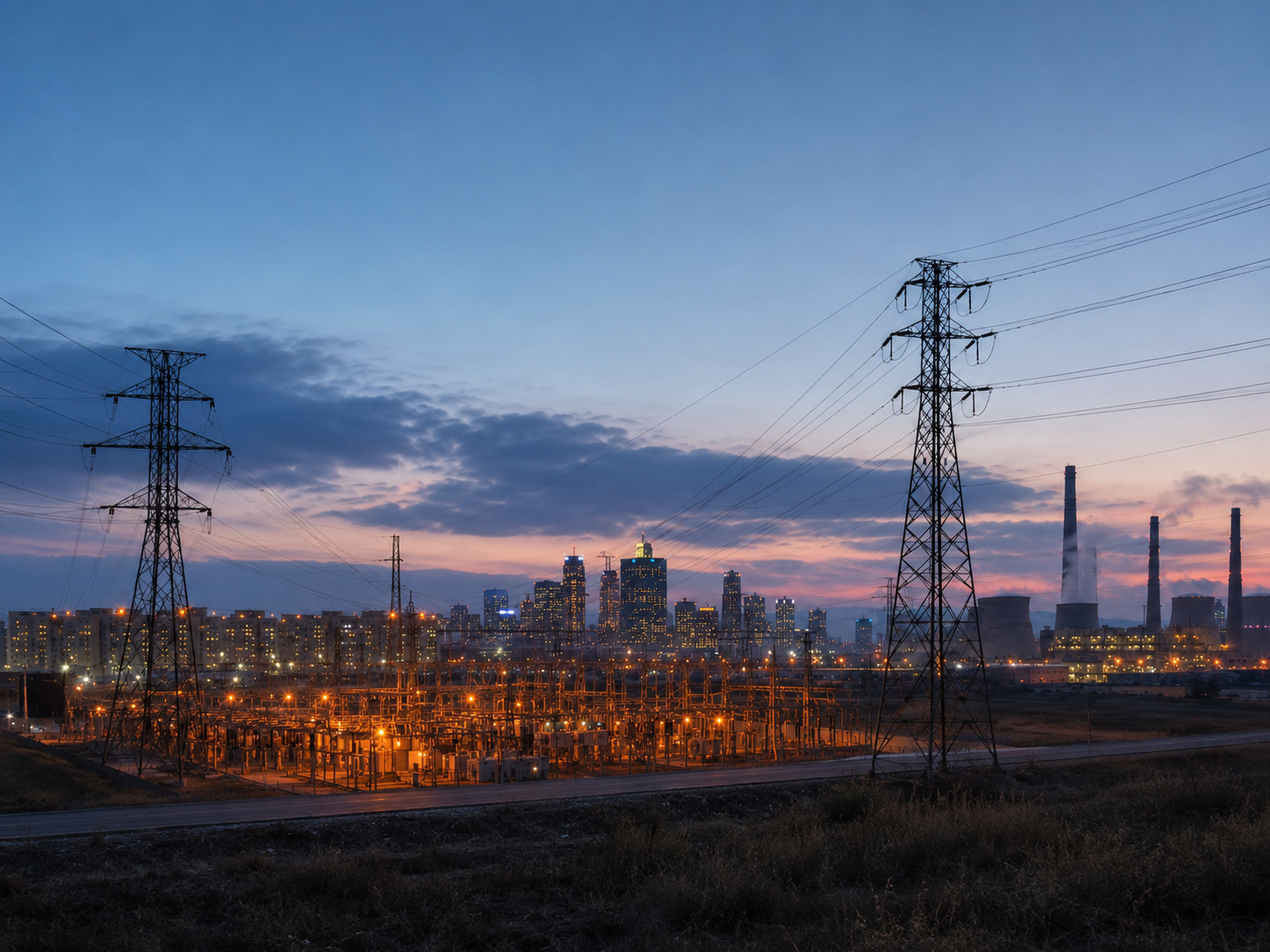
Electricity demand across the Mid-Atlantic and New York is surging, with PJM—an eight-times larger power market than NYISO—projecting its summer peak demand to rise by roughly 66,000 MW by 2040, while NYISO’s summer peak is expected to increase by about 6,000 MW over the same period. According to both power pools, grid capacity and transmission infrastructure are increasingly unable to keep pace. PJM’s planning assessments which is summarized by RMI highlight that interconnection backlogs are “stifling new generation additions,” while NYISO’s Reliability Needs Assessment, reported by Utility Dive, warns of an “increased risk of power shortages” due to transmission constraints. As data centers, AI workloads, and broad electrification expand at unprecedented speed, energy availability is emerging as a decisive factor for business expansion and site planning.
PJM Interconnection, the regional transmission organization that operates the electric grid and wholesale markets across 13 Mid-Atlantic states, is already seeing demand growth far exceed historical norms. Its latest Long-Term Load Forecast projects summer peak demand rising by roughly 66–70 GW, increasing from about 154 GW today to nearly 220 GW by the early-to-mid 2040s. This surge is driven by rapid data-center growth, manufacturing investment, and widespread electrification. Electrification refers to vehicles, heating systems, and industrial equipment shifting away from fossil fuels and toward electricity, adding substantial new loads as transportation, buildings, and factories become increasingly electric powered. While PJM currently operates with approximately 180 GW of installed generation capacity (plus roughly 8 GW of demand response), today’s supply base would fall well short of meeting these future peaks without significant new construction. Seasonal patterns are also changing, as winter peaks climb nearly as fast as summer peaks. At the same time, transmission upgrades are ongoing, but fossil-fuel and nuclear retirements continue to accelerate while new generation additions fail to keep pace.
The tightening supply picture is already reflected in PJM’s capacity markets. Recent Base Residual Auctions (BRAs) cleared at or near their price caps, with the 2026/27 delivery year clearing at $329.17 per MW-day which is the maximum allowable price. This is significant because clearing at the cap indicates that PJM had to pay the highest possible rate to secure enough future capacity. PJM runs a forward capacity auction to ensure that adequate generation will be available three years ahead of peak demand; when an auction clears at the maximum price, it signals that supply is extremely tight and that insufficient resources were willing or able to meet the region’s expected needs. Even with state-imposed caps in certain zones, total capacity costs across the PJM footprint exceeded $16 billion, more than double pre-2024 levels.
The challenges extend beyond procurement and are visible across project development. In PJM, more than 221 GW of generation capacity remains stuck in the interconnection queue as of late 2024, and historically only about 17% of queued projects ultimately reach completion, according to the State of the Market report. Developers in New York face similar barriers; long waits, expensive interconnection upgrades, and transmission bottlenecks continue to slow project advancement. For energy-intensive users from data centers to semiconductor fabs these delays have made the ability to secure power capacity a critical first step in site development. A semiconductor fab, for example, is a highly advanced facility that produces microchips used in smartphones, vehicles, AI systems, medical devices, and military equipment. These facilities require enormous amounts of electricity, making grid availability a defining factor in their location decisions.
These constraints are particularly acute in New York. NYISO projects that data centers and high-tech facilities will add roughly 2.6 GW of new demand by 2035, while advancing electrification is expected to make winter the dominant peak season by the 2040s. This occurs as heating systems shift from natural gas and oil to electric alternatives such as heat pumps, causing winter demand to surge during extreme cold periods and eventually surpass summer cooling loads. Nearly one-quarter of the state’s generation fleet is over 50 years old, and fossil-fuel retirements continue to outpace new additions, creating mounting reliability concerns. According to NYISO’s 2023–2042 System & Resource Outlook, the state will require between 100 GW and 130 GW of generation and storage capacity to meet future needs which is a scale that underscores how power availability is becoming a central constraint on economic growth.
In this environment, commercial developers and corporate site-selectors increasingly view energy certainty as a foundational element of expansion planning. Projects that secure firm supply commitments early whether through long-term power purchase agreements that lock in energy directly from generators, bilateral contracts with utilities that guarantee capacity, or on-site generation such as solar and battery systems are best positioned to advance. These approaches reduce dependence on constrained grid infrastructure, avoid lengthy interconnection queues, and offer greater confidence in long-term energy availability.
Strategic Takeaways for Businesses:
– Evaluate grid capacity early – Identify regions with available capacity or shorter interconnection timelines before committing to a site.
-Secure supply in advance – Lock in deliverability through PPAs, bilateral utility agreements, or renewable energy partnerships.
– Invest in resilience – On-site solar, battery storage, and microgrids can reduce exposure to congestion, outages, and high capacity costs.
-Engage utilities early – Early discussions around interconnection and capacity needs shorten delays and provide leverage in long-term planning.
As electrification accelerates with vehicles, heating systems, and industrial processes shifting from fossil fuels to electricity, the demand placed on the grid continues to rise sharply. In this shifting landscape, reliable power supply has become a strategic advantage. The regions that can consistently deliver it will shape the next decade of commercial and industrial growth across PJM and NYISO.